Tiny Planes Multiplayer & Players
Share the sky with up to five pilots—each on a private island.
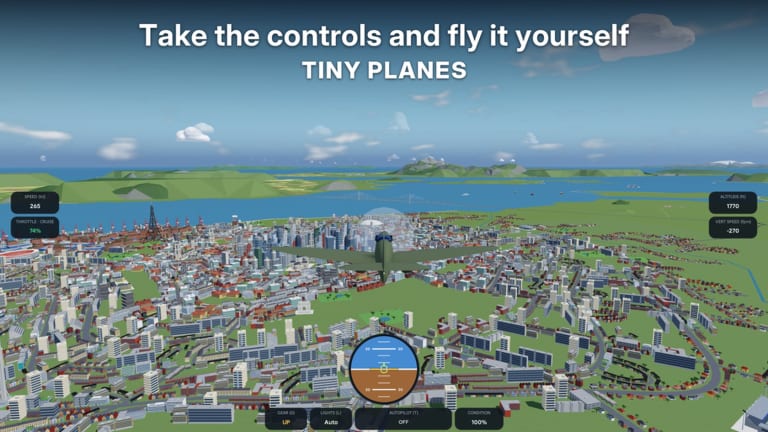
Multiplayer at a glance
Tiny Planes is built for shared sessions without forcing a single shared airport. Up to five players join the same server, and each player manages a private island. You still grow your own fleet from the 150+ aircraft roster, draw your own taxiways under the Build Update tools, and run your own routes—while friends appear as destinations you can visit, watch in the sky, and team with during disaster rescues.
This hub covers how multiplayer sessions feel, how visiting airports works, co-op rescue etiquette, and when a private server is worth using. Pair it with Getting Started if you are new, and keep Codes redeemed so every island starts with cash, cases, and pilots.
Five players, four islands, your own field
Public and private sessions cap around five simultaneous players. Each pilot claims space on the multi-island map rather than stacking terminals on one runway. That design keeps creative builds intact: your curved taxiways, self-fitting jet bridges, painted hangars, and custom lights stay yours even when the server fills up.
What you will notice in a healthy lobby:
- Other players’ aircraft crossing the sky between islands
- The option to fly toward a friend’s airport as a living destination
- Shared disaster events that invite group response
- Independent economies—your cash and fleet do not merge with theirs
Because economies stay separate, multiplayer is social and cooperative rather than a PvP steal-fest. Help a friend dig out of a bad landing streak by flying over for a rescue job together; do not expect to siphon their hangar.
Visiting airports
Visiting is the heart of the social loop. Once you can navigate between the four islands, point a capable aircraft toward a teammate’s field, land if their runway geometry allows, and tour what the Build Update tools can do in someone else’s hands. Seeing creative gate layouts and custom towers is one of the best ways to learn advanced airport building without reading a dry checklist.
Before you depart for a visit:
- Confirm your plane can handle the distance and expected runway length.
- Bring enough fuel and a pilot assignment you trust—or hand-fly with skills from the controls guide.
- Announce the visit in chat if the lobby is talkative; surprise touchdowns on a short unfinished strip help nobody.
- Leave cleanly—taxi clear, take off without blocking their only active runway, and avoid parking on unfinished grass.
Hosts should keep at least one usable runway and a clear taxi path when friends are online. A gorgeous but unlandable art build is fun to screenshot and frustrating to visit.
Co-op disaster rescues
Disasters—tornadoes, wildfires, tsunamis, earthquakes, volcanic eruptions—are where multiplayer shines. Emergency careers unlock a large specialty fleet over time, and answering an event with two or three friends multiplies both fun and payout potential. Coordinate roles: one player on firefighting or rescue airframes, another on transport, a third keeping passenger routes alive so the home airport does not starve during the event window.
Rescue etiquette that keeps lobbies friendly:
- Call the target in chat so three planes are not fighting for the same pickup.
- Do not grief a player who is mid-landing on a short strip during a storm.
- Share tips, not spoilers that ruin barn-find hunts unless asked—see Barn Finds.
- Leave emergency aircraft accessible; hogging the only capable rescue plane in a five-person lobby is poor form when others are unlocked for the same career track on their own islands.
After the event, return to passenger and cargo workhorses. Emergency frames are situational stars; they rarely replace a solid regional for baseline income. Check the Tier List for how emergency and military types fit the wider fleet.
Session etiquette checklist
Tiny Planes lobbies stay fun when everyone treats islands as personal canvases:
- Ask before giving unsolicited rebuild advice on someone’s taxi maze.
- Keep chat readable—spam codes in the wiki, not every three seconds in-server (bookmark Codes instead).
- If you crash on a friend’s field, apologize and clear wreckage paths if the game allows interaction; do not repeat dive-bombs for laughs.
- Respect build focus time. Some players are deep in part-resizing hangars from the Build Update; buzzing their tower for ten minutes is noise, not multiplayer.
- Vote thoughtfully on Discord aircraft polls—the community helps decide weekly additions that land in everyone’s hangar eventually.
Private servers and UI notes
Roblox private servers (when available for the experience) help creators and groups who want uninterrupted building. Use them when you are:
- Teaching a friend the tutorial without public-lobby chaos
- Filming barn-find routes or Build Update showcases
- Running a small Discord group night with reserved islands
- Testing experimental runway angles before publishing a public design
Private does not mean solo forever—invite up to the same five-player spirit with people you trust. Public servers remain better for spontaneous visits and meeting builders you do not already know.
In-experience UI cues to watch:
- Server or island selection when joining (choose where your private field lives)
- Indicators for other players’ aircraft in the sky
- Disaster alerts that signal a co-op window
- Settings → Feedback for bugs—report issues instead of assuming grief
If a lobby feels empty, you can still progress fully solo; multiplayer is an amplifier, not a gate. The core loop—codes, tutorial, starters, expansion—works the same on a quiet island. Follow Best Starters so your field is impressive when visitors finally arrive.
Growing together without racing blindly
Friendly competition is natural when five airfields light up at once. Resist the urge to skip every progression step because a neighbor already taxis a wide-body. Their codes, playtime, and prior sessions may differ. Stick to a sane unlock path:
- Redeem codes and finish onboarding (Getting Started).
- Stabilize starter GA income (Best Starters).
- Expand infrastructure (Airport Building).
- Add regionals, then airliners as runways allow (Tier List).
- Layer emergency and military frames for events.
- Hunt legends like Concorde when the economy is safe (Barn Finds).
Visit often, rescue together, and steal ideas—not progress anxiety.
Related guides
- Getting Started — first flight and tutorial flow
- Controls — hand-flying and autopilot basics
- Airport Building — Build Update taxiways, gates, and parts
- Tier List Hub — fleet roles for shared sessions
- Codes Hub — cash and legendary pilots for every island
- Updates Hub — patch notes that affect multiplayer
- Wiki Directory — full site map
Frequently Asked Questions
Quick answers for Tiny Planes pilots and airport builders.
How many players can join a Tiny Planes server?
Sessions support up to five players. Each player manages their own private island rather than sharing a single airport footprint.
Can I land at a friend's airport?
Yes. Fly between islands to visit other players' fields. Make sure your aircraft and their runway length are compatible, and clear the active runway promptly after landing.
Do we share cash or aircraft in multiplayer?
No. Economies and fleets stay per player. Multiplayer is about visiting, flying together, and cooperating on disaster rescues—not merging banks.
When should I use a private server?
Use a private server for focused building, filming, tutoring friends, or Discord group nights. Public lobbies are better for spontaneous visits and meeting new builders.
How do co-op rescues work?
During disasters, team up with emergency-capable aircraft, call targets in chat, and avoid blocking each other's approaches. Emergency careers unlock many specialty planes over time.